Dar calls for new regional security framework for lasting peace
Deputy Prime Minister Ishaq Dar said the Makkah defence agreement signed in August could be a starting point for a wider regional security architecture. He spoke in an interview with Euronews' World Conversation programme in Islamabad.

- Dar proposes a broader regional security architecture, with the Makkah defence agreement as a possible starting point
- He says the UK, France and Germany are engaging and Italy is interested
- He says Pakistan urges the US and Iran to respect the 18 June Islamabad memorandum
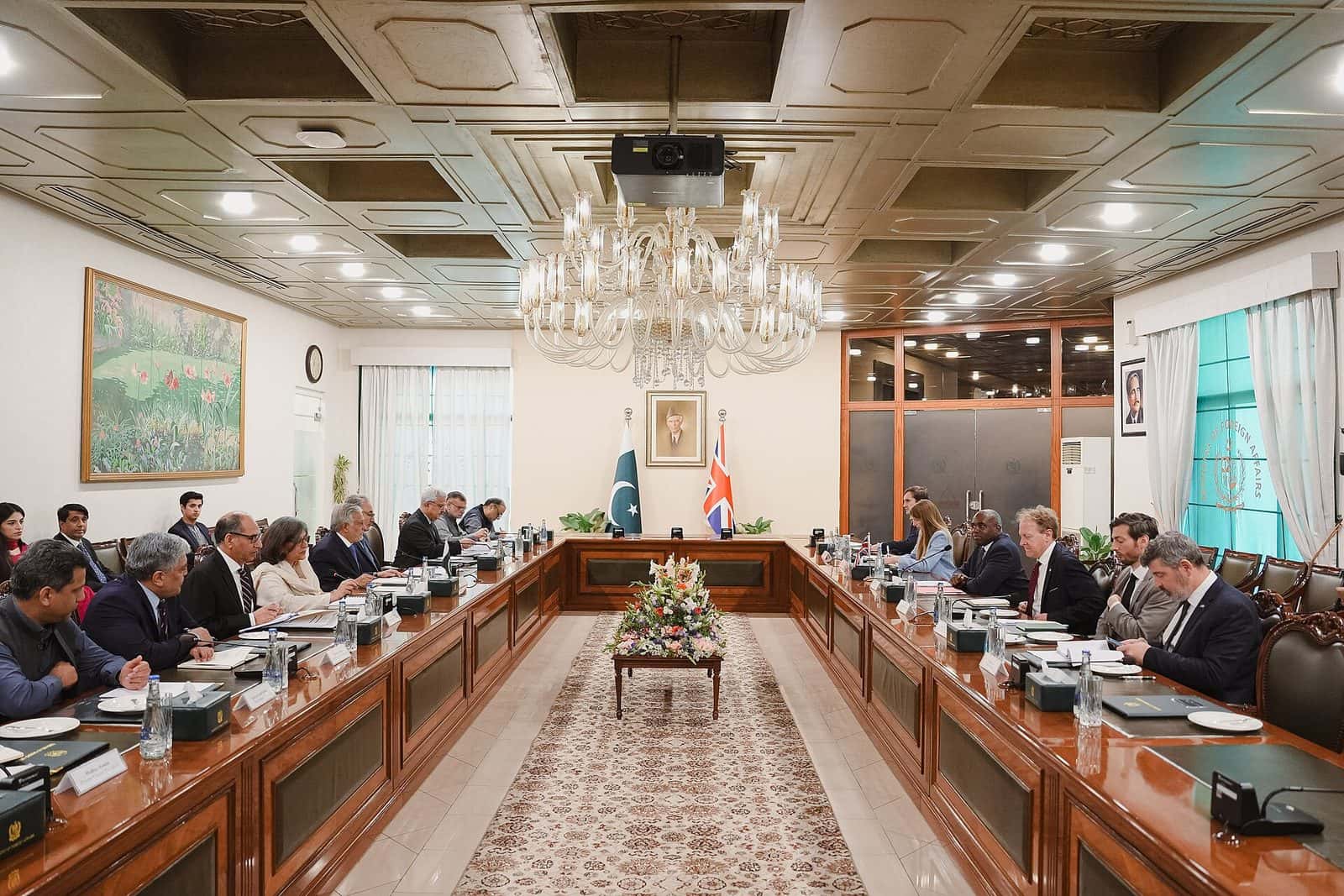
Deputy Prime Minister and Foreign Minister Ishaq Dar has called for a new regional security framework to ensure lasting peace and stability, The Express Tribune reported. He made the remarks in an interview with Euronews' World Conversation programme. Business Recorder said the interview was held in Islamabad.
Dar said the Makkah defence agreement signed by Pakistan, Türkiye and Saudi Arabia in August could be a possible starting point for a broader regional security architecture. He said the United Kingdom, France and Germany were engaging with the emerging framework, and Italy had expressed interest in taking part in the dialogue. He added that Germany planned to host a meeting of the R4 and E4 countries in December.
"Regional peace across the Middle East should now be established through a special mechanism, as we all have to see the new security architecture (...) and the consequences on the global economy beyond the Gulf region," Dar said. He also said: "The world cannot afford the energy supply chain disruptions. See the price hikes, see the people suffering."
Dar described Pakistan's role after hostilities broke out on 28 February. He said he contacted Iranian Foreign Minister Abbas Araghchi on the first day of the conflict, urging restraint, and that Pakistan worked to bring the United States and Iran to the negotiating table. According to Dar, April negotiations led to an Islamabad memorandum of understanding signed on 18 June.
He said the memorandum's key principles included freedom of navigation through the Strait of Hormuz without tolls, fees, permits or other restrictions. Dar said later violations led to the collapse of the peace arrangement. He said Pakistan and China proposed a five-point peace initiative, which received backing from the European Union and the United Kingdom, and that Pakistan continues to urge both parties to respect the 18 June agreement.
On Pakistan's own position, Dar said the country pursues an independent foreign policy and believes in multilateralism. He said: "Our external debt is $130 billion. Our estimated potential of the mineral resources and the rare earth material is $6-10 trillion. So you can imagine the potential." He attributed Pakistan's economic instability to policy shortcomings and hoped the political circle would reach consensus on a Charter of Economy.
Dar also criticised India's 2019 revocation of the special status of Jammu and Kashmir, and called India's suspension of the Indus Waters Treaty illegal. He hoped Afghanistan would take verifiable action against terrorist outfits operating against Pakistan, and said Pakistan had proposed a regional electric grid to help improve the situation in Afghanistan.
Background
khabr.pk reported on 20 November that Dar told Euronews the UK, France and Germany were engaging with a proposed regional security structure, and that it would benefit Europe. The interview was given in Islamabad.
Why it matters for Pakistan
Pakistan's foreign policy choices shape its ties with neighbours and its own stability. Dar linked disruption of energy supplies to price rises that hurt people, a concern for households already facing petrol at Rs322 and diesel at Rs357 a litre as of 20 November, according to figures khabr.pk has recorded. His remarks on the Indus Waters Treaty and on Afghanistan touch water supplies and security at Pakistan's borders. His comments on external debt and mineral potential concern the country's economic outlook.
Get khabr.pk news on Facebook and YouTube
Short news videos every day, and the day’s top stories in your feed.