Dar tells Euronews new regional security setup will benefit Europe
Deputy Prime Minister Ishaq Dar said the UK, France and Germany are engaging with a proposed regional security structure. He gave the interview in Islamabad to Euronews' World Conversation programme, Euronews reported.
- Dar says the UK, France and Germany are engaging with the new security structure, and Italy wants to join the dialogue
- He called the Mecca Pact of August a possible start of a regional security architecture
- He described Pakistan's mediation between the US and Iran, which led to a memorandum signed on 18 June
Pakistan's Deputy Prime Minister and Foreign Minister Mohammad Ishaq Dar has said a new regional security architecture would also benefit Europe, according to an interview Euronews published on 19 November. He spoke in Islamabad for the channel's World Conversation programme.
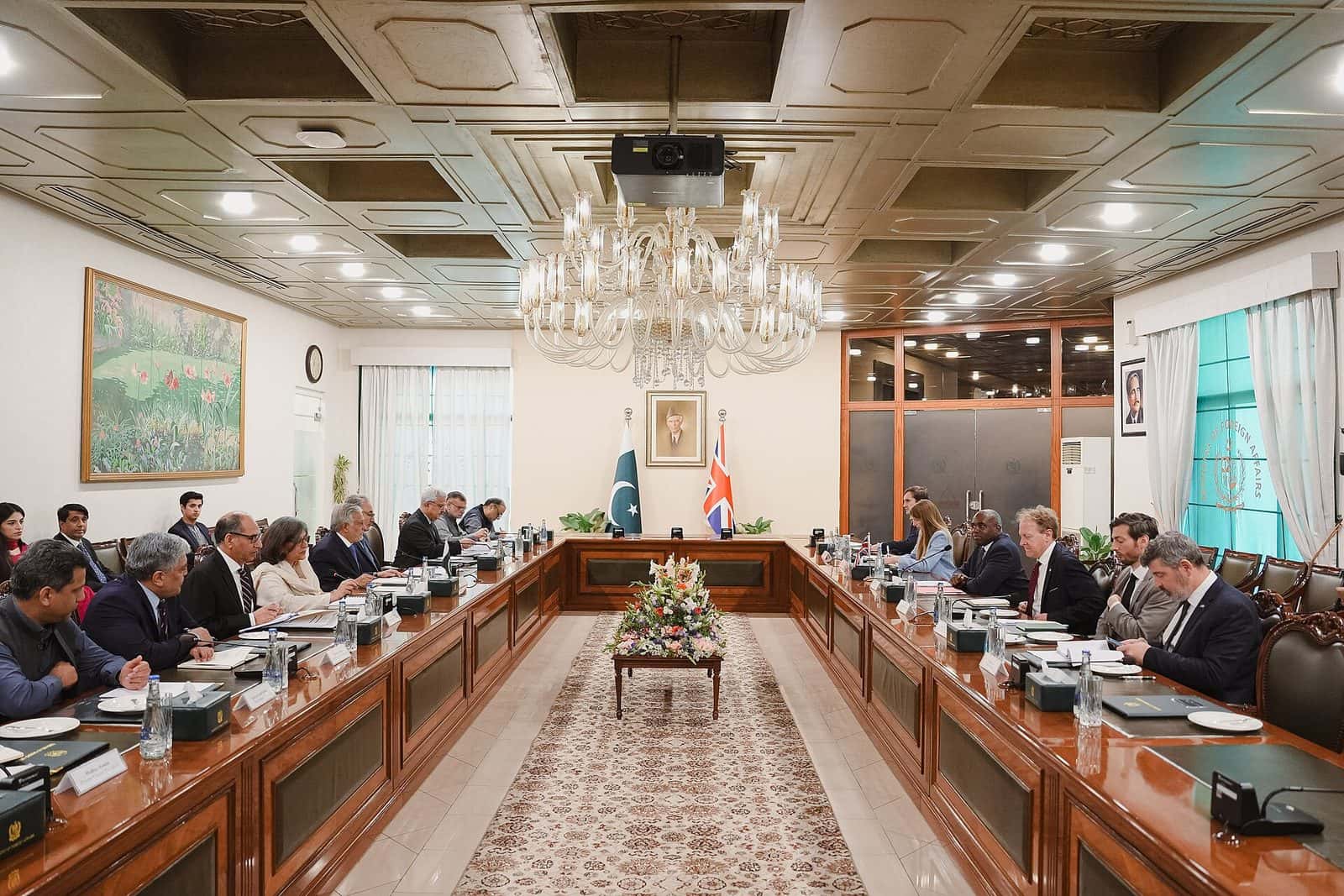
Dar described the mutual defence Mecca Pact, signed by Pakistan, Turkey and Saudi Arabia in August, as a possible beginning of such an architecture. He said the UK, France and Germany are engaging with the new structure and that Italy is interested in being part of the dialogue.
Dar also spoke about the efforts behind the end of the war, which Euronews described as a US-Israel agreement in June. He said his government took the initiative in mediation between the US and Iran in the early phases of the war, and that the diplomatic process began on the first day.
He said he called Iranian foreign minister Abbas Araghchi on the morning of 28 February, the first day of the war, urging restraint. In his words: "In the early morning of the first day of the war, 28 February, I called (Iranian foreign minister Abbas) Araghchi to please exercise strength and don't react, because I was wondering if they might react against the Gulf countries, which unfortunately they did," Dar said.
Dar said Pakistani leadership worked to bring the parties to the negotiating table. He said one session lasted 21 hours. "It was 21 hours of a marathon session with no real breaks, but only consultative breaks, and, after the fifth round, I was very sure that by the sixth round we have covered so much of the mileage that we reached a point (of agreement)," he said. He added: "We didn’t give up."
The US-Iran Memorandum of Understanding to end the Iran war was signed on 18 June. Dar said its core points included no tolls, permits, fees or permissions in the Strait of Hormuz, which he said almost every country supported. He said the EU and the UK also backed the diplomatic process.
Dar said all parties are still working hard to achieve free movement of sea lanes, and that Pakistan continues to persuade both sides to respect the agreement.
Background
khabr.pk reported on 19 November that Dar met ASEAN Secretary-General Kao Kim Hourn in Islamabad to discuss trade, investment and connectivity. On 6 November, we reported that the UN Security Council adopted a Pakistan-initiated statement on diplomacy during hostilities.
Why it matters for Pakistan
The interview sets out how Pakistan describes its diplomatic role, from mediation between the US and Iran to a proposed security framework involving Turkey, Saudi Arabia and European states. The Strait of Hormuz shipping arrangements Dar discussed concern sea lanes, a subject of interest to Pakistan's fuel imports. In our figures, petrol was Rs323 per litre and diesel Rs355 per litre on 19 November.
Get khabr.pk news on Facebook and YouTube
Short news videos every day, and the day’s top stories in your feed.