NASA's Swift telescope set for uncontrolled re-entry; landing area unclear
NASA's Swift space telescope is expected to fall back to Earth within days after a rescue mission failed to lift it to a higher orbit. Exactly when and where it will come down is not yet clear.
- Swift is expected to re-enter uncontrolled, likely on or around Friday, according to the U.S. Space Force.
- Most of the 1,500-kilogram observatory should burn up; NASA says harm to people is unlikely.
- Its orbit covers a band near the equator that includes parts of South Asia.
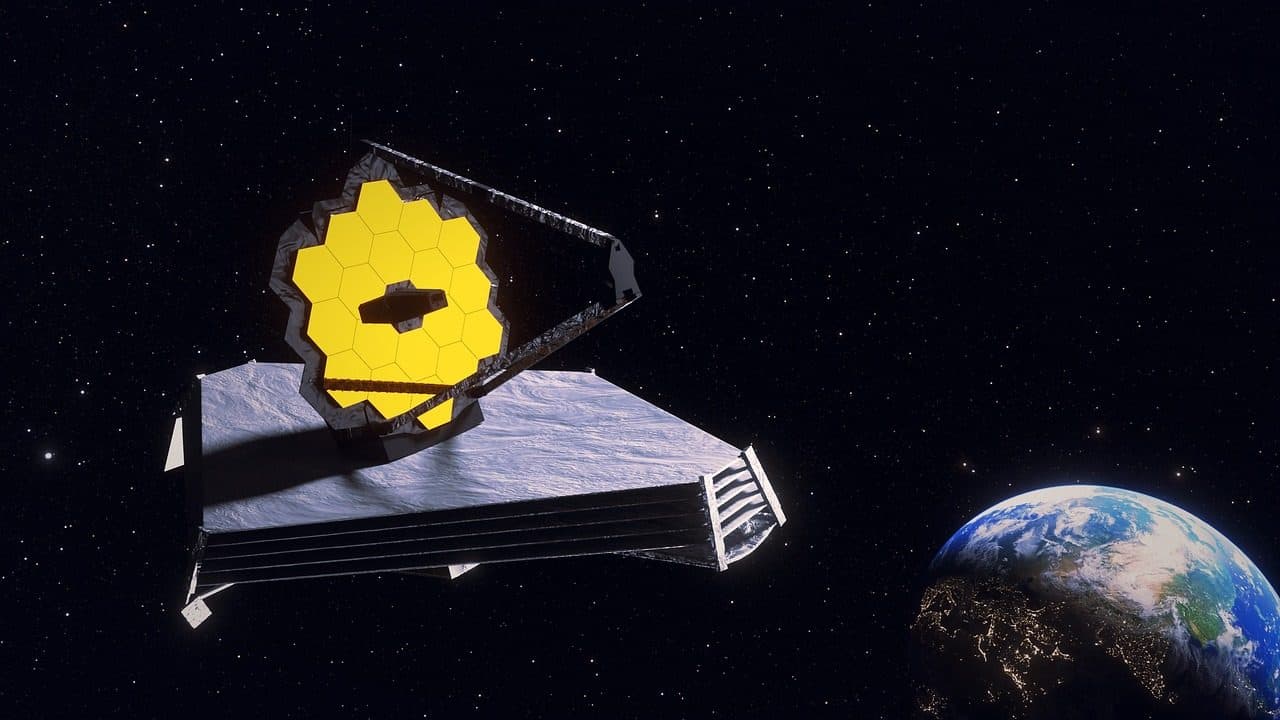
NASA's Swift space telescope is expected to crash back to Earth in the next few days, Space.com reported. The observatory will re-enter the atmosphere in an uncontrolled way after a robotic rescue mission failed to raise it to a higher orbit. The exact time and place of the fall are not yet known.
The Independent reported that the U.S. Space Force predicts the Neil Gehrels Swift Observatory will come down on or around Friday, and that the Space Force is tracking its path. According to the report, intense solar activity in recent years brought Swift down faster than anticipated.
Swift launched on November 20, 2004, and spent 22 years in orbit. It studied gamma-ray bursts and other cosmic events using three telescopes: BAT, XRT and UVOT. Over that time it discovered more than 2,000 gamma-ray bursts and 1,400 exploding stars, the Independent reported.
On Oct. 20, NASA reported that Swift's orbit had decayed to 171 miles (275 kilometers) above Earth. The roughly 3,300-pound (1,500-kilogram) observatory could no longer compensate for increased drag and entered safe mode. The operations team at Pennsylvania State University then sent a command that effectively ended its operations.
Swift's orbit passes only over a band within about 21 degrees of the equator, according to Dean Sladen, an aerospace engineer at Accu Components. He said this band is mostly ocean but also crosses populated parts of Africa, South and Southeast Asia and Latin America. The Independent, citing the reentry zone, also listed Australia, India and Central and South America.
Most of Swift's body is aluminum, wiring and electronics, which melt early in re-entry, Sladen said. The likeliest survivors are its six heavy reaction wheels and tougher telescope parts such as lenses and mirrors. NASA's Brad Cenko, the mission's chief scientist, said pieces of some denser and mirrored parts may survive, and that any that do will most likely land in the ocean.
Darren McKnight of LeoLabs said Swift will likely break up enough not to pose a ground casualty hazard, though the inner workings of its X-ray and optical telescope might survive. NASA has said harm to anyone on the ground is unlikely, and LeoLabs describes the risk as very small. NASA's debris requirements limit the risk of human casualty from surviving debris to one in 10,000, Sladen said, adding that no detailed risk assessment for Swift has been published so far.
McKnight said: "It is unfortunate that Swift was not 'reorbited,' but from a reentry hazard perspective it is a small portion of the stuff coming back in." He said ten times more objects re-enter each year than five years ago. John Nousek, an astronomer at Pennsylvania State University, said: "We've known this day would come since before Swift was launched."
Why it matters
Swift's orbit crosses parts of South Asia, so the uncontrolled re-entry is a story readers in Pakistan may follow, although NASA says harm to people on the ground is unlikely.