Lahore PM2.5 at eight times WHO limit as PAQI counts 16,714 crop fires
A PAQI report says Lahore's average PM2.5 was eight times the WHO guideline. Satellites detected 16,714 likely crop-residue fires in Punjab between 1 October and 9 November.
- Lahore's average PM2.5 was 126 micrograms per cubic metre, eight times the WHO guideline, PAQI said.
- Satellites detected 16,714 likely crop-residue fires in Punjab from 1 October to 9 November.
- Lahore's AQI fell from 489 to 232 between 9am and 3pm on Monday, officials said.
- Rain is forecast in several Punjab districts over two days.
Lahore's average PM2.5 concentration reached eight times the World Health Organisation's recommended guideline, according to a report by the Pakistan Air Quality Initiative (PAQI) released on Tuesday. The average was 126 micrograms per cubic metre, and Lahore exceeded the national 24-hour air quality standard on all 40 days with valid readings.
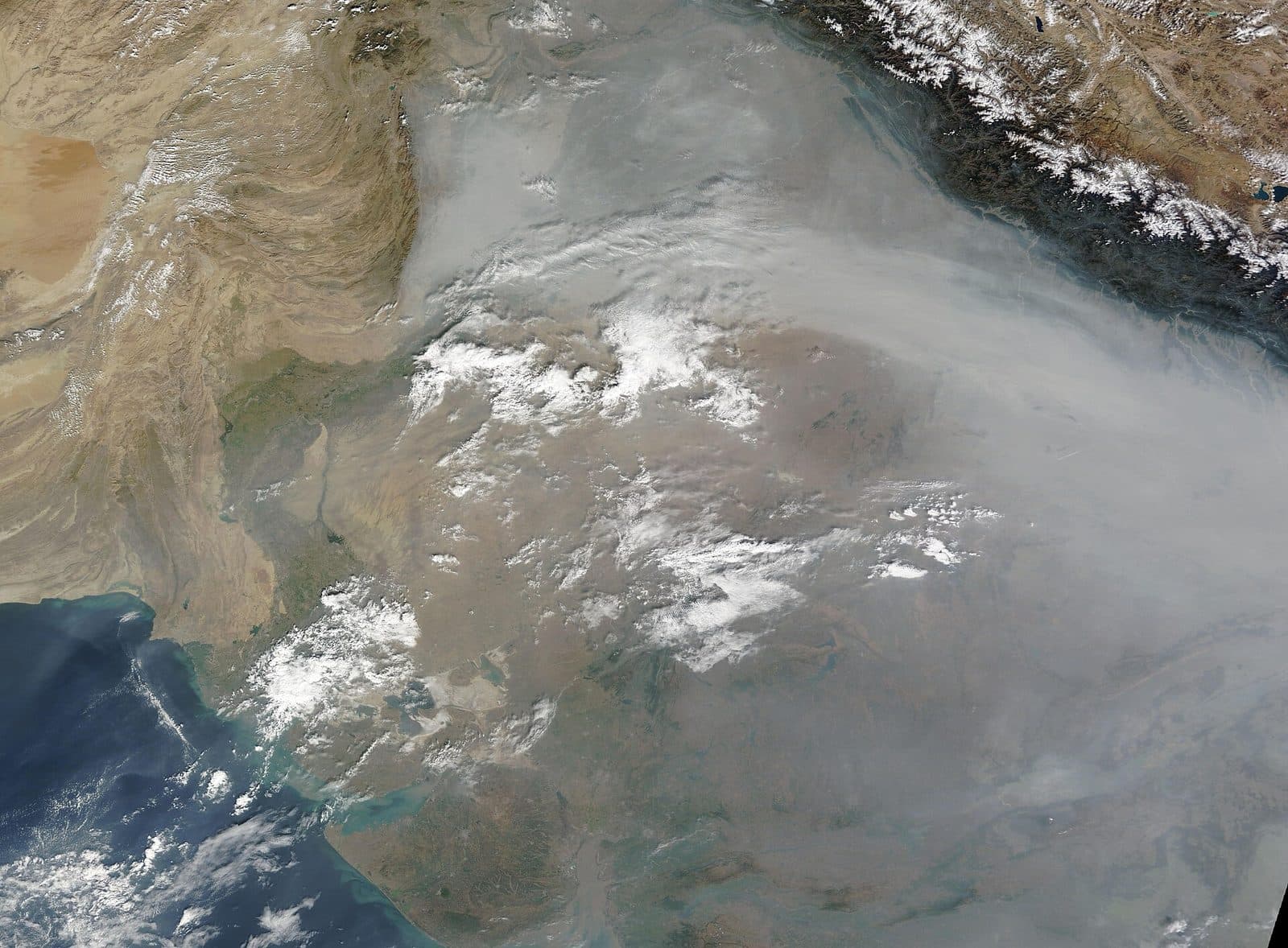
The report also counted thousands of suspected crop-burning fires across Punjab. Satellite data detected 16,714 likely crop-residue fires between 1 October and 9 November. Separately, satellite instruments picked up 18,825 fires in the province, about 89 per cent of them linked to crop residues. The highest single-day count was on 1 November, with 1,102 fires.
Five districts accounted for 54 per cent of all detections: Sheikhupura with 2,559, Jhang with 2,192, Okara with 2,062, Hafizabad with 1,893 and Gujranwala with 1,417.
PAQI found that Lahore averaged 175 micrograms per cubic metre on days when air passed over fire-affected areas, against 93 micrograms on other days. Lahore's average was 11 per cent lower than in the same period last year, and similar trends were seen in Multan and Bahawalpur. Researchers said stagnant weather and limited air movement also trapped pollutants.
The report questioned the view that Diwali fireworks across the border were the main cause. Lahore recorded a 10 per cent rise in PM2.5 after Diwali, while Faisalabad and Multan each saw a 40 per cent rise, more than several cities nearer the border. PAQI said chemical testing of particulate matter would be needed to separate firework emissions from agricultural smoke.
The Punjab Environment Protection and Climate Change Department reported a considerable improvement after emergency operations. Lahore's AQI fell from 489 at 9am to 232 at 3pm on Monday, about 53 per cent, and all 11 monitoring stations showed falling pollution. Anti-smog guns and mist sprinkling covered about 640 kilometres of roads, and inspections of factories and brick kilns were stepped up.
EPA Director General Abdullah Nayyar Sheikh said: "Quick Response Units were monitoring satellite-detected fire incidents and taking action against those responsible for agricultural burning."
The Provincial Disaster Management Authority forecast rain over two days in Lahore, Kasur, Sialkot, Narowal, Gujranwala, Sheikhupura and other districts. It is expected to reduce smog but bring colder weather. Strong winds and isolated hailstorms were forecast in parts of southern Punjab, and citizens were advised to avoid unnecessary travel during storms.
Background
khabr.pk reported on 9 November that Punjab Senior Minister Maryam Aurangzeb warned smog could intensify, citing a PAQI figure of 214 micrograms per cubic metre for Lahore between 2 and 8 November. On 8 November, Chief Minister Maryam Nawaz Sharif ordered deputy commissioners to enforce a complete ban on crop residue burning.
Why it matters for Pakistan
Hazardous air in Lahore and Punjab affects the health of millions of families, especially children and older people. The report ties much of the pollution to burning in districts such as Sheikhupura, Jhang and Okara, which bears on how the province's ban on crop burning is enforced. Forecast rain and cold weather may change conditions for residents and travellers in the coming two days.
Get khabr.pk news on Facebook and YouTube
Short news videos every day, and the day’s top stories in your feed.