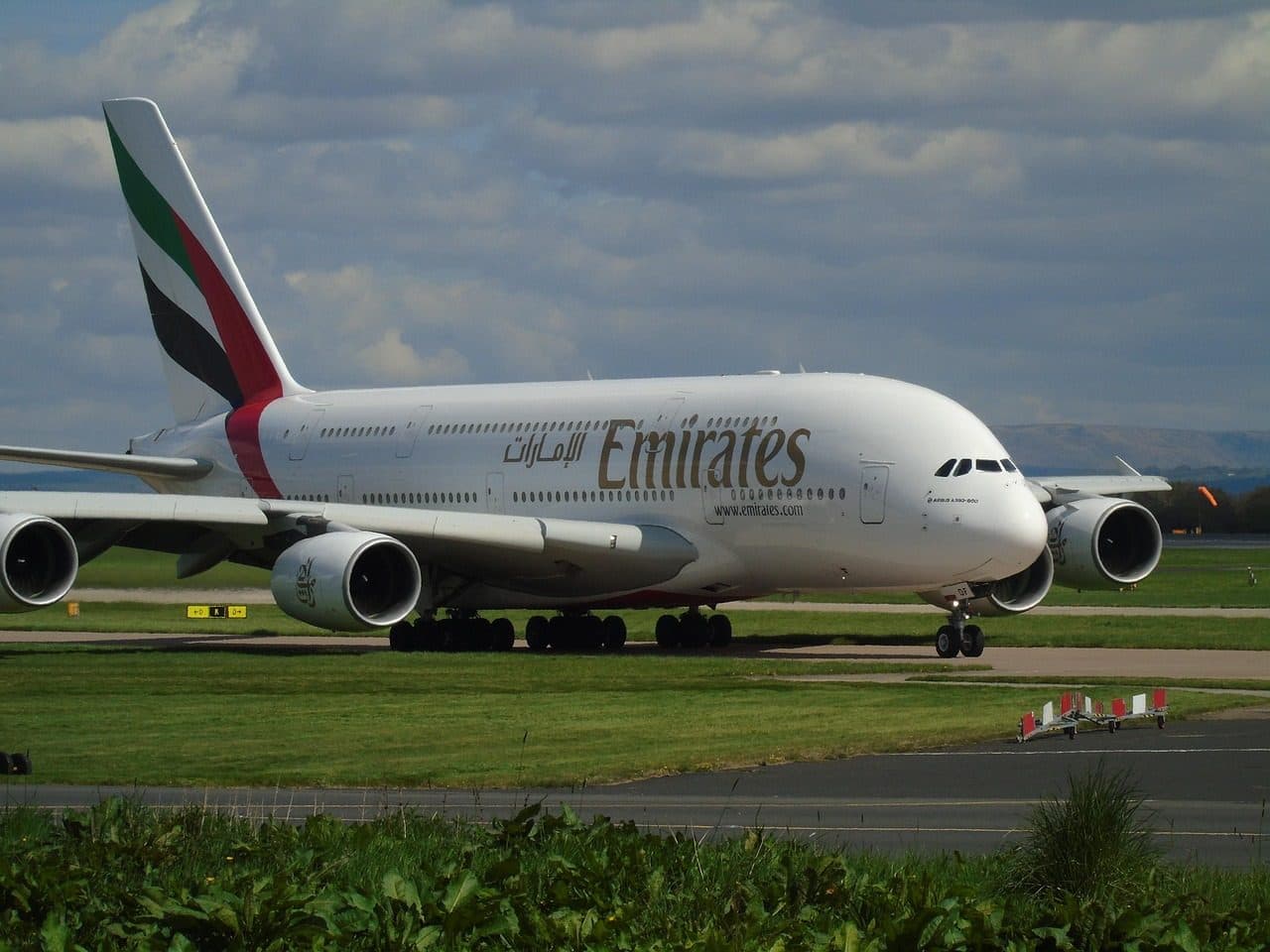
Emirates Group first-half profit falls 66% amid Gulf conflict, fuel costs
Emirates Group's after-tax profit fell 66% to AED 3.6 billion in April-September. Revenue declined 12% to AED 66.2 billion as passenger numbers dropped 22%.
For information only, not investment advice. Prices change quickly: check the time and source of every figure.
- After-tax profit fell 66% to AED 3.6 billion in the first half of 2026-27
- Revenue fell 12% to AED 66.2 billion
- Passengers carried dropped 22% to 21.8 million
- Cargo revenue rose 52%
Emirates Group reported a 66% year-on-year drop in after-tax profit for the first half of its 2026-27 financial year, which covers April to September. Net profit fell to AED 3.6 billion, while pre-tax earnings stood at AED 4.1 billion.
The group cited disruption from the Gulf conflict and high fuel costs. Gulf News noted that the US-Iran conflict began on February 28. Group revenue declined 12% to AED 66.2 billion from AED 75.4 billion a year earlier, which followed record results. EBITDA dropped 41% to AED 12.5 billion.
Sheikh Ahmed bin Saeed Al Maktoum, chairman and chief executive of Emirates Group, said "the group remained profitable despite a sharp rise in global jet fuel costs and regional disruptions, supported by steady customer demand and strong cargo operations." According to the chairman, coordination with government authorities helped restore air travel safely and ease travel restrictions across the region.
Emirates carried 21.8 million passengers in the six months, down 22%. Overall capacity fell 10% to 28.2 billion available tonne-kilometres, reflecting a reduced flight schedule. Passenger capacity measured in seat kilometres declined 17% and traffic in revenue passenger kilometres dropped 25%. The average seat factor fell to 72% from 79.5%.
The group said global jet fuel prices doubled from a year earlier. Emirates cut fuel uplift by 12%, but fuel costs before hedging gains rose 60%. Fuel made up 34% of airline operating costs. Fuel-price risk management gains of AED 7.1 billion reduced the net rise in fuel costs to 13%, and operating costs overall fell 2%.
Cargo was a stronger area. Emirates moved 1.2 million tonnes, 1% less than before, but cargo revenue rose 52%. It added five Boeing 777 freighters, deployed its first converted passenger-to-freighter aircraft, and added Almaty and Zhengzhou to its freighter network. By September 30 the airline was operating 91% of its pre-disruption network, linking 150 airports in 78 countries and territories.
Group cash reserves were AED 54.1 billion on September 30, down from AED 59.6 billion at the end of March, after debt repayments, aircraft pre-delivery payments and a remaining AED 2 billion dividend to its owner. The workforce fell 2% to 128,237. Its airport services unit dnata had revenue of AED 11 billion, down 7%, and pre-tax profit down 51% to AED 410 million. The group continues to invest in fleet expansion and product upgrades.
Background
khabr.pk reported on 4 November that 24 Indians have been reported killed in the West Asia conflict since February, including after an attack on Riyadh's King Khalid International Airport. On 5 November it reported that Donald Trump acknowledged the Iran war and the fuel prices it caused affected the Republican midterm defeat.
Why it matters
Emirates is a major airline for Pakistani travellers, and a Gulf slowdown can affect jobs and remittances. The airline's reduced schedule and lower passenger numbers show how the regional conflict has hit air travel. By September 30 it was running 91% of its pre-disruption network. Fuel costs also matter locally, with khabr.pk recording petrol at PKR 362 per litre on 4 November.