BepiColombo spacecraft set to enter Mercury orbit on 21 November
The joint European-Japanese BepiColombo mission is due to enter Mercury's orbit on 21 November, eight years after launch. It will study the planet's geology, atmosphere and magnetic field for about a year.
- BepiColombo, a joint ESA and JAXA mission, enters Mercury orbit on 21 November
- It launched in October 2018 and carries two orbiters
- The primary mission is expected to last one Earth year
The BepiColombo spacecraft is set to enter orbit around Mercury on 21 November, New Scientist reported, ending an eight-year voyage towards the sun. The Guardian described it as only the second mission ever to enter orbit around the planet.
BepiColombo is a joint mission of the European Space Agency (ESA) and the Japan Aerospace Exploration Agency (JAXA). It launched in October 2018 and followed a long looping path, flying past Venus and Mercury several times. In 2024, a thruster problem pushed the arrival date back from 2025 to 2026, according to New Scientist.
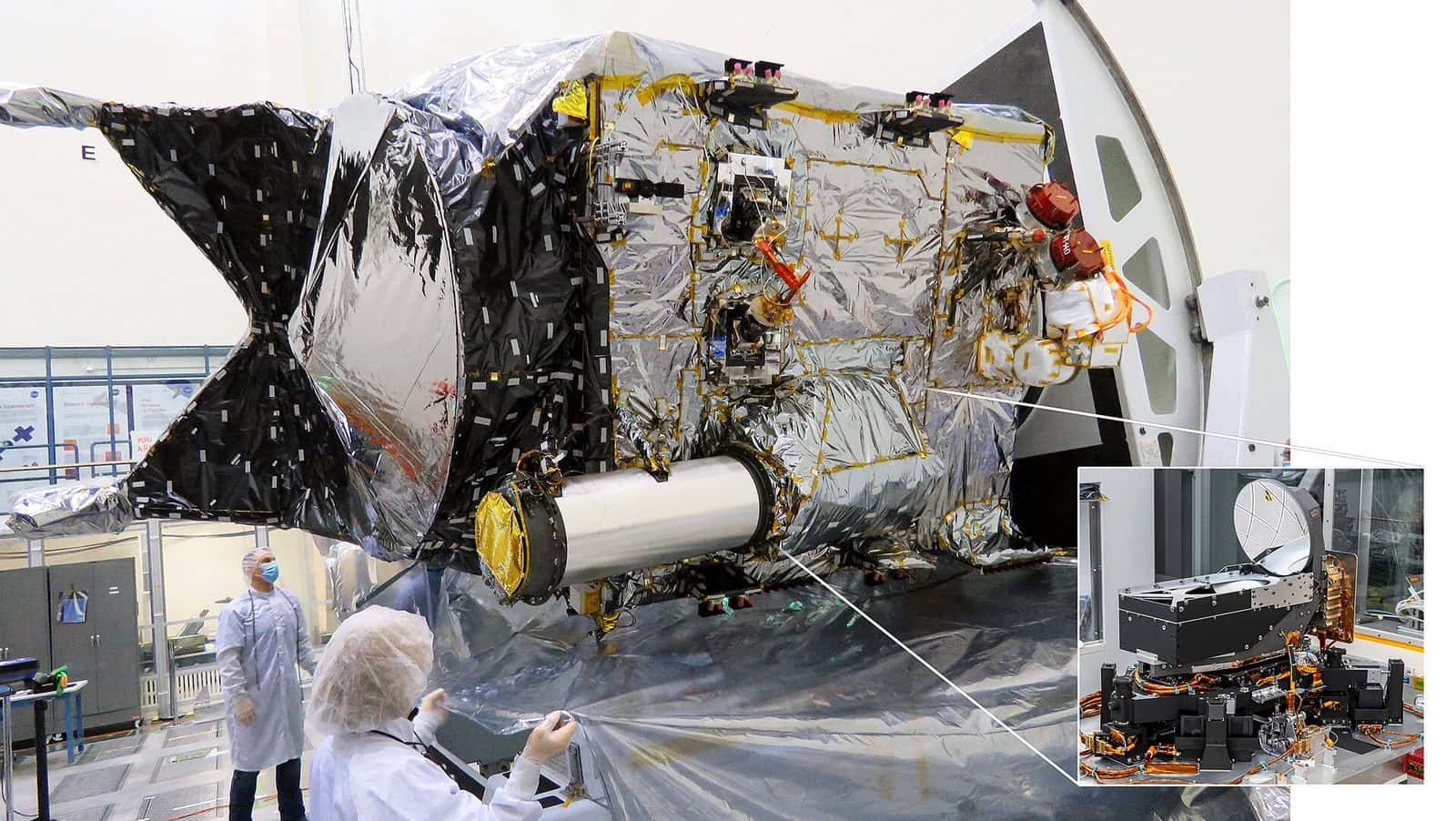
The spacecraft comprises two orbiters: ESA's Mercury Planetary Orbiter (MPO) and JAXA's Mercury Magnetospheric Orbiter, known as Mio or MMO. In December the two will separate and move into different orbits. MPO will follow a near-circular orbit of 2.3 hours, while Mio will take a more distant elliptical orbit of 9.3 hours.
MPO is more than twice the size of Mio. It carries 11 scientific instruments focused largely on Mercury itself, including spectrometers, a laser altimeter and instruments studying the planet's exosphere. Mio has five sets of instruments to study Mercury's magnetic field, its atmosphere and the solar wind.
Nikkei Asia reported that Mio will begin observations in an environment where sunlight is about 10 times stronger than on Earth. It said this is the first non-US mission to Mercury, launched in cooperation with Europe, and that Mio's instruments and components were developed by Japanese companies, with NEC among those supporting it.
The primary mission is expected to last one Earth year, a little more than four Mercury years, and could be extended by another year. Researchers hope it will help explain Mercury's magnetic field, how its atmosphere is supplied with material, and how its iron core formed.
Background
khabr.pk has recently covered other space stories, including NASA's Voyager 1 reaching one light-day from Earth on 18 November and SpaceX catching a Starship upper stage with tower arms in Texas.
Why it matters for Pakistan
Readers in Pakistan who follow space news can track a major planetary mission reaching its target. The reports describe a rare orbital arrival at Mercury, a planet few spacecraft have studied, and its findings on the planet's magnetic field and core will be of interest to science students and enthusiasts.
Get khabr.pk news on Facebook and YouTube
Short news videos every day, and the day’s top stories in your feed.